20 Days Horse Trek Through The Forbidden Kingdom of Upper Mustang, Nepal
Nepal | Cultures & Civilizations, Landscapes & Expeditions
Overview
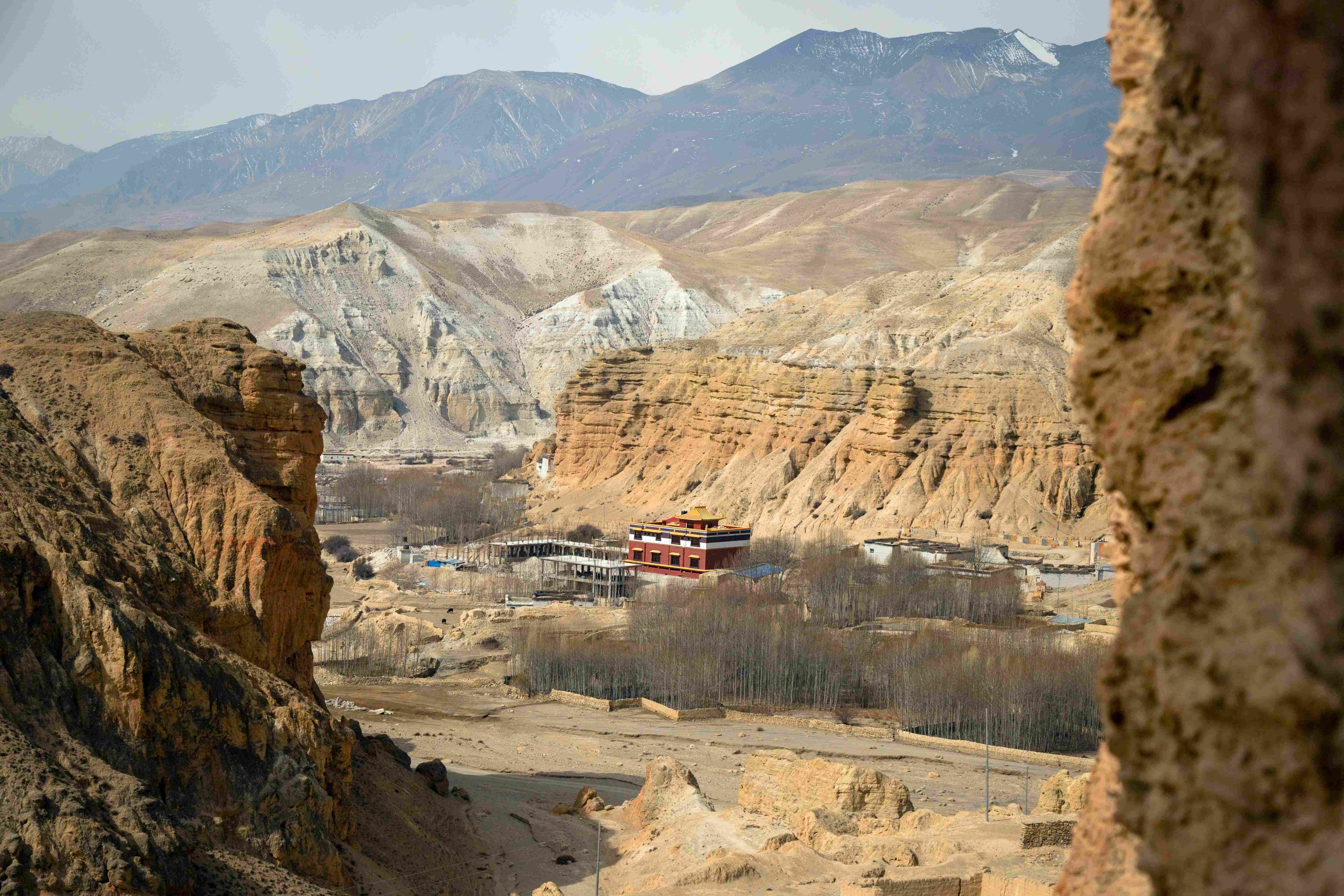
Beyond the towering peaks of the Annapurna and Dhaulagiri ranges lies Upper Mustang, one of the most culturally distinctive regions of Nepal and the historic heartland of the former Kingdom of Lo. Often described as Nepal's Last Forbidden Kingdom, Upper Mustang remained closed to foreign travellers until 1992 and continues to be a restricted area today. Separated from Nepal's greener middle hills by the dramatic Kali Gandaki Gorge, the region belongs to the Trans-Himalayan landscape, where barren valleys, towering cliffs, windswept plateaus, ancient cave dwellings, fortified villages, and centuries-old Tibetan Buddhist settlements create an environment unlike anywhere else in the country.
For centuries, Upper Mustang stood at the crossroads of the Himalayan trade routes connecting Nepal and Tibet. Salt, grain, wool, livestock, textiles, and everyday goods travelled across these mountains, carried by people and animals along trails that connected isolated settlements. Horses were an important part of this way of life, helping traders and local communities move across terrain where roads did not exist. Even as modern roads and vehicles have transformed transportation in the region, horses continue to hold an important place in Mustang's rural economy and cultural heritage.
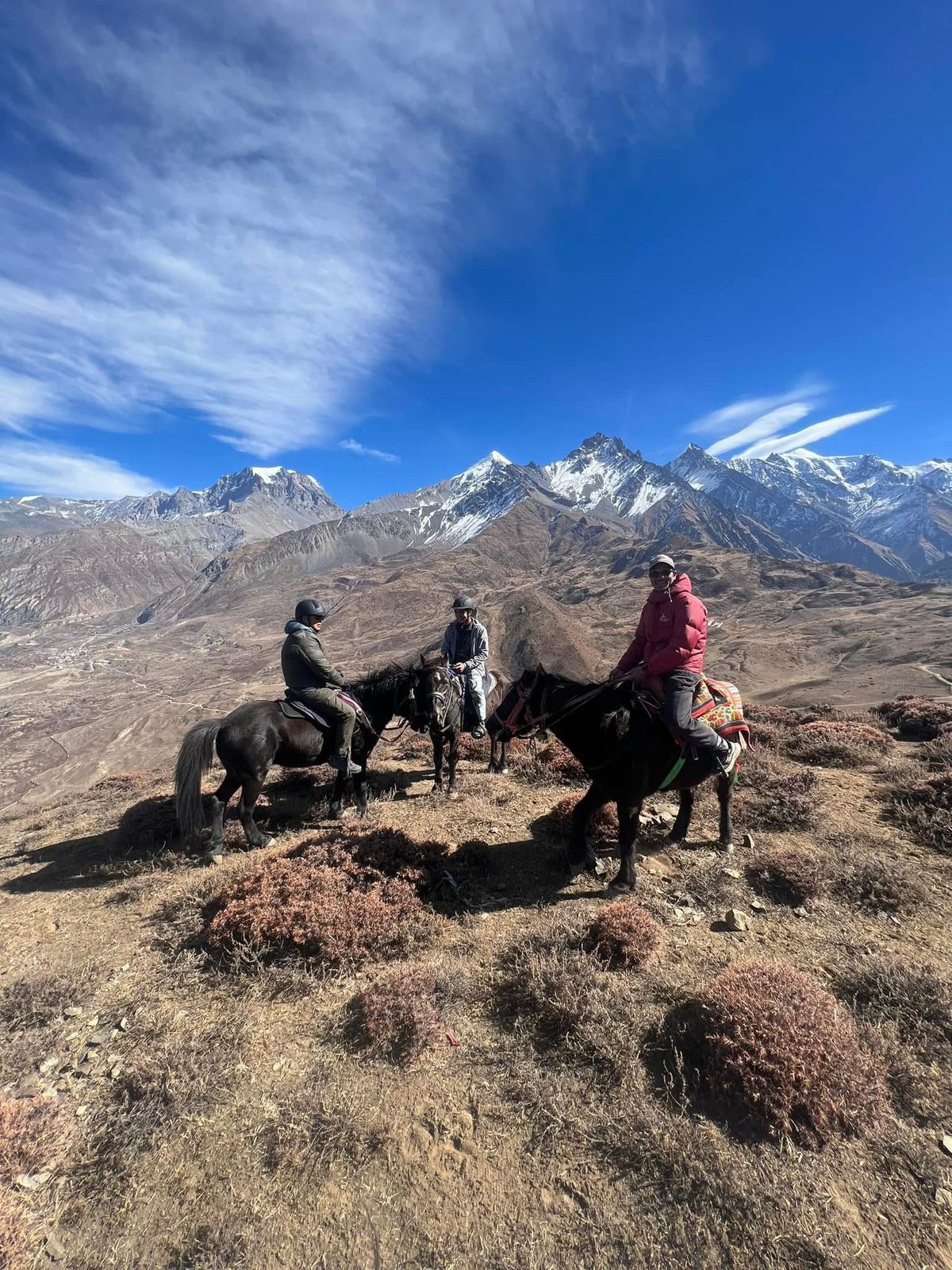
This journey offers an opportunity to experience Upper Mustang in a way that reflects how its landscapes were traditionally travelled: on horseback.
Rather than following the region primarily by road, the expedition moves between villages along mountain trails, river valleys, ancient trade routes, and high Himalayan paths. The pace allows you to experience the landscape gradually, passing prayer flags, mani walls, chortens, monasteries, cultivated fields, and traditional stone and mud-brick homes while encountering communities whose Tibetan-influenced culture remains deeply rooted in everyday life.
Your expedition begins in Kathmandu before travelling overland to Pokhara and onward by jeep through the Kali Gandaki Valley to Jomsom. From here, the horseback journey begins, following the traditional route towards Kagbeni, the historic gateway to Upper Mustang. After entering the restricted region, the trail continues through Chuksang, Samar, Giling, Ghami, Tsarang, and Lo Manthang, the historic capital of the former Kingdom of Lo.
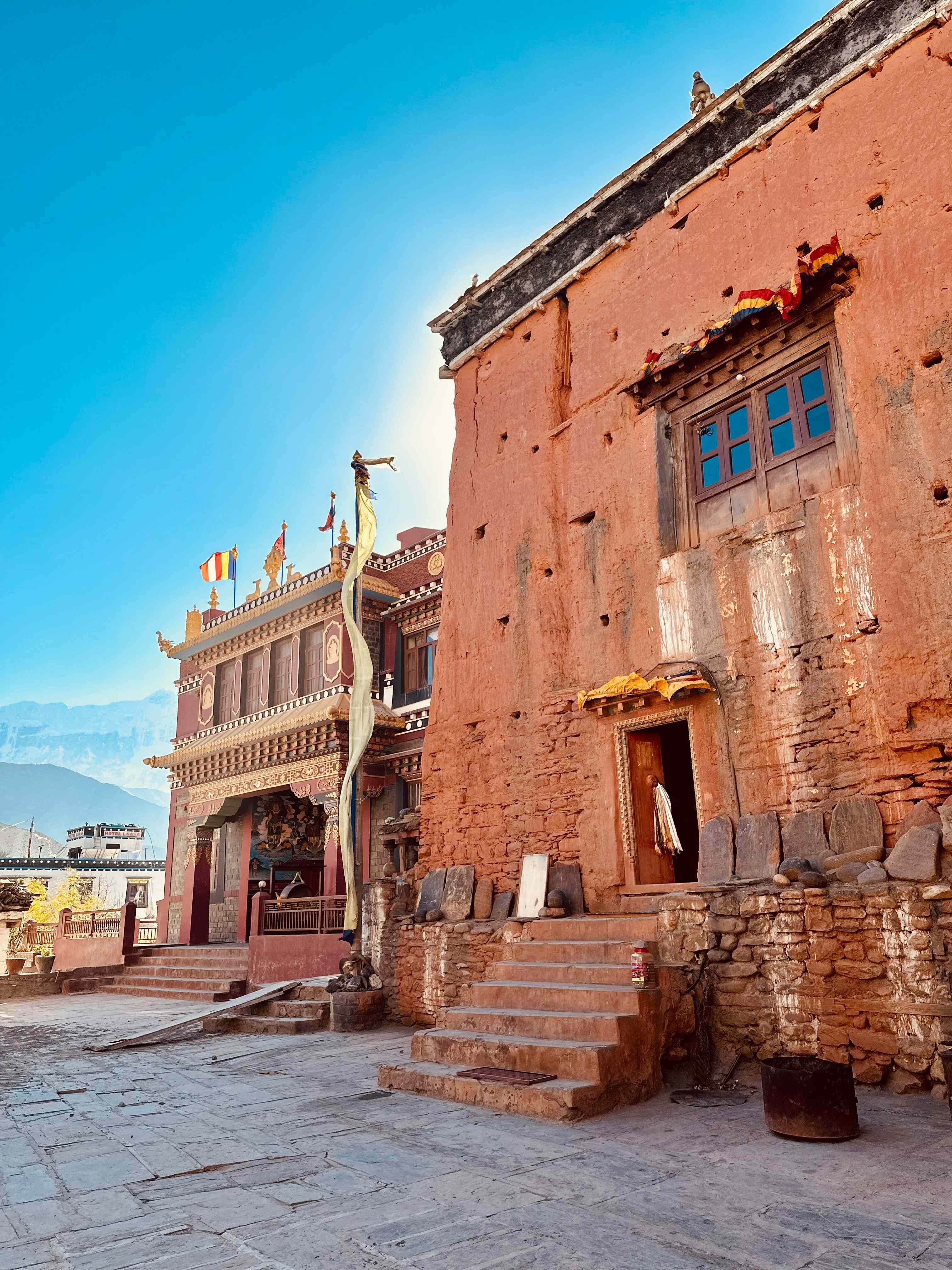
Along the way, the landscape changes constantly. Deep river gorges give way to barren plateaus and dramatic cliffs coloured by layers of red, ochre, grey, and brown rock. Ancient caves appear in seemingly inaccessible cliffs, while small patches of green farmland surround villages where agriculture remains closely tied to the seasons. Monasteries, prayer wheels, mani walls, and chortens provide reminders of the Tibetan Buddhist traditions that have shaped the region for centuries.
The cultural centrepiece of the expedition is Lo Manthang, the historic walled city that once served as the capital of the Kingdom of Lo. Its narrow lanes, whitewashed buildings, ancient monasteries, palace, and surrounding settlements preserve a distinctive architectural and cultural heritage. A full day is dedicated to exploring Lo Manthang, allowing time to look beyond the landscape and understand the living traditions of the communities who continue to call the region home.
Upper Mustang is home to communities whose lives have been shaped by one of the Himalayas' harshest environments. Tibetan Buddhist traditions remain deeply embedded in village life, while agriculture, livestock, trade, and increasingly tourism continue to support local households. Horses, yaks, sheep, goats, and other livestock have historically played an important role in this economy.
At the same time, Upper Mustang is changing. Roads have reached many villages, modern construction is increasingly visible, and younger generations are increasingly leaving remote settlements for education and employment elsewhere in Nepal and abroad. Tourism has become an important source of income, providing work for local guides, horsemen, lodge owners, drivers, and other community members. Yet monasteries continue to function, festivals continue to be celebrated, and many traditional practices remain part of everyday life.
Throughout the expedition, you'll be accompanied by local horsemen familiar with the animals, trails, weather, and terrain of Upper Mustang. Their knowledge is particularly valuable in a landscape where routes can pass through narrow gorges, exposed ridges, rocky riverbeds, and high-altitude terrain.
Rather than presenting Upper Mustang as a polished or conventional riding destination, this expedition offers an experience rooted in the realities of the region. Accommodation is generally in local mountain lodges and guesthouses, meals are locally prepared, and the journey involves genuine interaction with communities living in remote Himalayan settlements.
For travellers seeking a deeper cultural journey alongside extraordinary landscapes, horseback travel through Upper Mustang offers an opportunity to experience the former Kingdom of Lo at a pace that connects its ancient trails, living traditions, and remarkable Trans-Himalayan environment.
A Note on the Horses & Responsible Travel
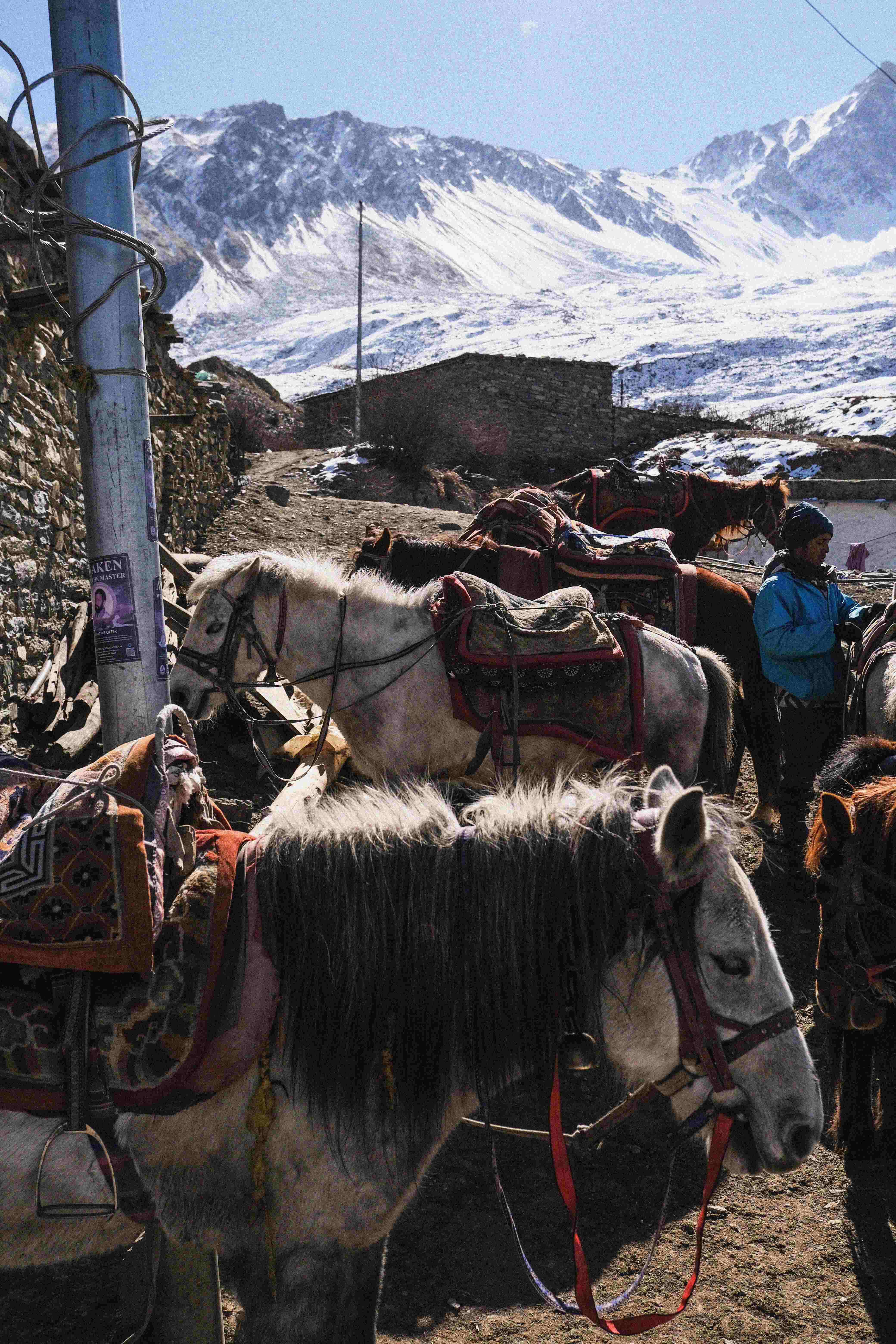
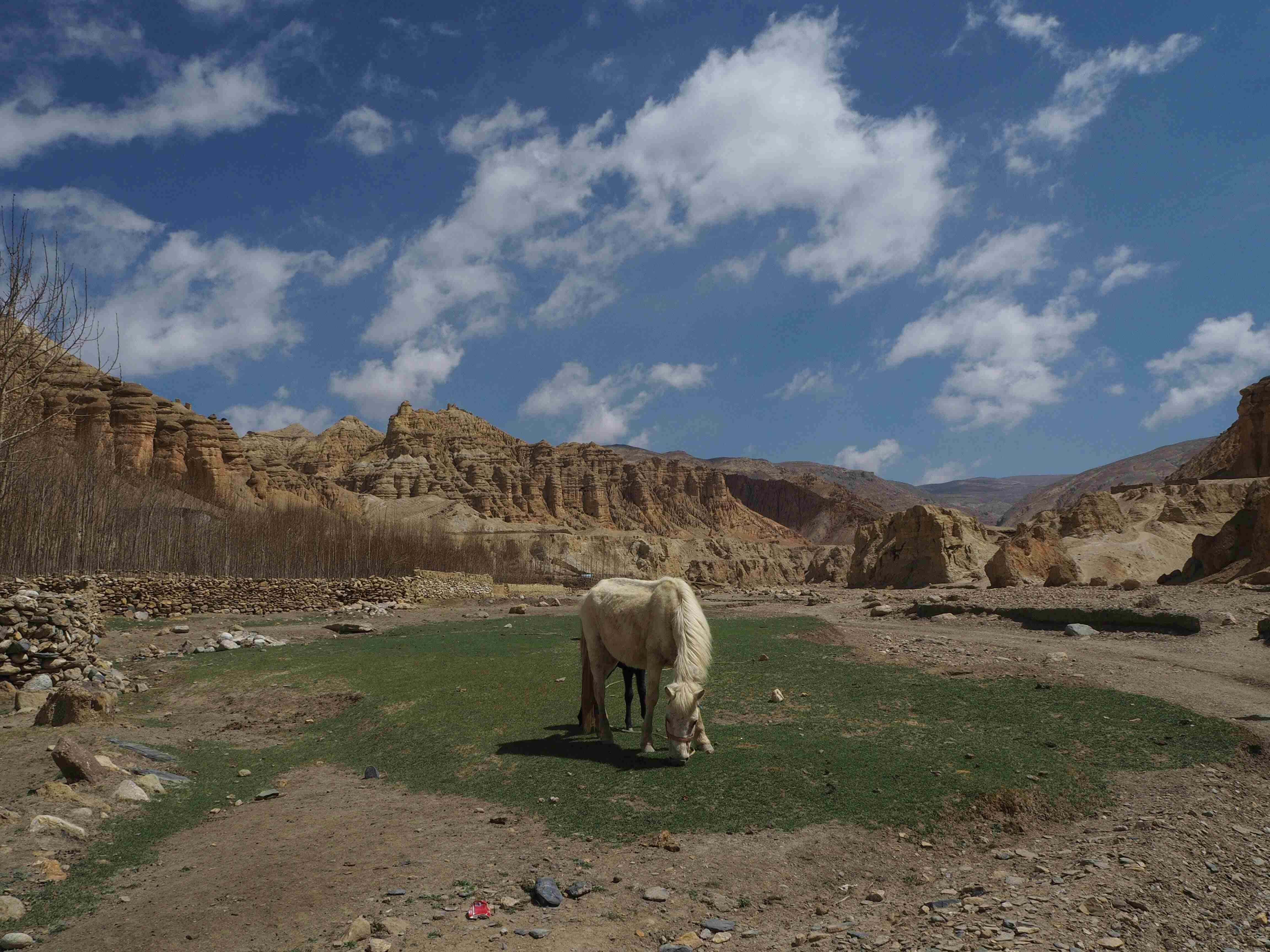
Horses have long been part of everyday life in Mustang, and their role extends well beyond tourism. The traditional horses used in the region, often described as Mustang horses or Tibetan mountain ponies, are generally smaller than many Western riding breeds but are strong, agile, and remarkably sure-footed. Having lived and worked in the Himalayas for generations, they are naturally suited to rocky mountain trails, steep ascents and descents, high-altitude terrain, riverbeds, and changing weather conditions.
These are working horses, not animals raised exclusively for recreational riding. Historically, horses helped communities move goods and people between settlements and formed part of the wider trading economy that connected Mustang with Tibet and the lower regions of Nepal. Even today, horses may be used to transport agricultural products, food supplies, firewood, construction materials, and other goods in places where modern vehicles remain limited.
Their appearance and condition may therefore differ from horses commonly seen in riding schools, ranches, or professional equestrian centres. They are part of a traditional Himalayan working environment rather than a recreational riding industry, and their care reflects the realities of the communities and landscapes in which they live.
Responsible horse tourism in Upper Mustang is closely connected to the economic role of these animals. Tourism provides horse-owning families and local horsemen with an additional source of income, giving horses continued value within communities whose traditional livelihoods are changing. This economic opportunity can help families continue to care for their animals while maintaining the knowledge of horse handling and mountain travel that has been passed through generations.
The local horsemen accompanying these journeys are often deeply familiar with the animals and the terrain. Their knowledge of horse behaviour, mountain trails, weather, altitude, and local conditions is an important part of travelling safely through Upper Mustang. During longer expeditions, horses may also be rotated or additional animals used where possible, allowing individual horses appropriate periods of rest.
At the same time, travellers should understand the nature of the experience. These are working mountain horses, and their appearance, lifestyle, and traditional use may be unfamiliar to visitors accustomed to recreational or competitive equestrian settings. Travellers who are highly sensitive to the appearance or working conditions of animals, or who expect horses maintained to recreational or competitive standards, may find that a traditional horseback journey through Upper Mustang does not align with their expectations.
For those who appreciate the realities of rural Himalayan life, travelling on horseback offers a direct connection to a tradition that remains part of Mustang's cultural and economic landscape. The journey creates income for local horse-owning families and horsemen while allowing travellers to experience the ancient trails and communities of Upper Mustang in a way that remains connected to the region's own history.
Top Highlights
Explore the restricted Upper Mustang region on horseback, following ancient trails through the former Kingdom of Lo.
Ride through the dramatic Trans-Himalayan landscapes of barren valleys, deep gorges, high plateaus, and vividly coloured rock formations.
Travel with experienced local horsemen who have generations of knowledge of Mustang's horses, trails, terrain, and mountain conditions.
Enter Upper Mustang through Kagbeni, the historic gateway to the former Kingdom of Lo.
Discover traditional Himalayan settlements including Chuksang, Samar, Giling, Ghami, Tsarang, Dhakmar, and Sangboche.
Spend time in Lo Manthang, the historic walled capital of the former Kingdom of Lo and cultural heart of Upper Mustang.
Explore ancient monasteries, chortens, mani walls, prayer wheels, traditional homes, and other expressions of Tibetan Buddhist heritage.
Witness the extraordinary cave dwellings and cliffside settlements carved into the mountains of Upper Mustang.
Experience the changing landscape from the Kali Gandaki Valley to high desert-like plateaus and dramatic eroded cliffs.
Learn about the distinctive Tibetan-influenced culture and traditions that have shaped Upper Mustang for centuries.
Experience a region where ancient customs continue alongside modern roads, tourism, education, migration, and changing livelihoods.
Travel through villages where agriculture remains possible despite the region's harsh climate and limited growing season.
Discover the historic relationship between horses, Himalayan trade, and local communities.
Support horse-owning families and local communities by contributing to livelihoods connected to traditional mountain travel.
Experience Upper Mustang at a slower pace, travelling through the landscape on horseback rather than simply passing through it by road.
Handcrafted Itinerary
Day 1: Arrival in Kathmandu (1,400 m / 4,593 ft)
Welcome to Nepal. Upon arrival at Tribhuvan International Airport, you will be greeted by a representative and transferred to your hotel in Kathmandu.
After check-in, the remainder of the day is free to rest after your journey or begin exploring the surroundings of the Kathmandu Valley.
In the evening, meet your trek leader for a detailed briefing about the upcoming Upper Mustang expedition, including the journey ahead, horseback riding conditions, altitude, and preparations for entering the restricted area.
Overnight in Kathmandu.
Day 2: Drive from Kathmandu to Pokhara (822 m / 2,697 ft) by Shared Tourist Bus
Day 3: Drive from Pokhara to Jomsom (2,720 m / 8,924 ft) by Jeep
Day 4: Horse Ride from Jomsom to Kagbeni (2,840 m / 9,317 ft)
Day 5: Horse Ride from Kagbeni to Chuksang (3,050 m / 10,006 ft)
Day 6: Horse Ride from Chuksang to Samar (3,660 m / 12,008 ft)
Day 7: Acclimatization Day in Samar
Day 8: Horse Ride from Samar to Giling (3,806 m / 12,487 ft)
Day 9: Horse Ride from Giling to Ghami (3,520 m / 11,549 ft)
Day 10: Horse Ride from Ghami to Tsarang (3,560 m / 11,680 ft)
Day 11: Horse Ride from Tsarang to Lo Manthang (3,840 m / 12,600 ft)
Day 12: Full-Day Exploration of Lo Manthang
Day 13: Horse Ride from Lo Manthang to Dhakmar (3,820 m / 12,533 ft)
Day 14: Horse Ride from Dhakmar to Sangboche (3,800 m / 12,467 ft)
Day 15: Horse Ride from Sangboche to Samar
Day 16: Horse Ride from Samar to Kagbeni (2,840 m / 9,317 ft)
Day 17: Horse Ride from Kagbeni to Jomsom (2,720 m / 8,924 ft)
Day 18: Fly from Jomsom to Pokhara & Connect to Kathmandu
Day 19: Free Day in Kathmandu
Day 20: Departure from Nepal
What is Included
Airport arrival and departure transfers in Kathmandu.
3-star hotel accommodation in Kathmandu on a Bed & Breakfast basis.
3-star hotel accommodation in Pokhara on a Bed & Breakfast basis.
Accommodation in quality mountain lodges/guesthouses throughout Upper Mustang.
Full-board meals (Breakfast, Lunch, and Dinner) during the horseback expedition in Mustang.
Shared tourist bus transportation from Kathmandu to Pokhara.
Private 4WD Jeep transportation from Pokhara to Jomsom.
Domestic flight from Jomsom to Pokhara.
Domestic flight from Pokhara to Kathmandu.
All airport transfers for domestic flights.
Experienced English-speaking licensed trekking guide throughout the expedition.
Professional local horse guide(s) from the Mustang region.
Horse allocated to each rider throughout the expedition.
Backup horse(s) where operationally required and available.
Traditional Mustang riding equipment and saddlery.
Upper Mustang Restricted Area Permit (RAP).
Annapurna Conservation Area Permit (ACAP).
TIMS Card, where applicable under current regulations.
All additional local permits required for the itinerary.
Government taxes.
24/7 support by Geet Travel.
What is Excluded
International airfare to and from Nepal.
Nepal entry visa fees.
Lunch and dinner in Kathmandu and Pokhara.
Alcoholic beverages, soft drinks, bottled beverages, snacks, and personal refreshments.
Bottled/boiled drinking water and beverages at mountain lodges where additional charges apply.
Personal riding equipment and clothing.
Horse riding helmet — travellers are strongly recommended to bring their own properly fitted helmet.
Travel insurance (mandatory) covering:
Horseback riding activities
High-altitude travel
Emergency medical treatment
Helicopter evacuation
Trip cancellation and interruption
Personal expenses including laundry, Wi-Fi, charging electronic devices, hot showers, and other lodge services.
Tips and gratuities for guides, horsemen, drivers, lodge staff, and support staff.
Additional accommodation, meals, or transportation resulting from unforeseen itinerary changes.
Expenses caused by flight delays or cancellations, road closures, adverse weather, natural disasters, political unrest, or circumstances beyond Geet Travel's control.
Any services not specifically mentioned under "Trip Includes."
Make an Inquiry
You're inquiring about: 20 Days Horse Trek Through The Forbidden Kingdom of Upper Mustang, Nepal
Frequently Asked Questions
1. Do I need a special permit to travel to Upper Mustang?
Yes. Upper Mustang is a restricted area, so foreign travellers need a Restricted Area Permit (RAP) in addition to the Annapurna Conservation Area Permit (ACAP). The RAP is issued through a registered trekking agency, and a licensed guide is required for travel in the region. Permit regulations and fees can change, so the current requirements should be confirmed when booking.
2. How much does the Upper Mustang Restricted Area Permit cost?
3. Can I travel to Upper Mustang independently?
4. Is Upper Mustang difficult?
5. Do I need previous horse-riding experience?
6. What are the horses like?
7. Is horseback riding in Upper Mustang responsible tourism?
8. What should I expect from the horses and their condition?
9. Is there Wi-Fi and electricity in Upper Mustang?
10. What kind of landscapes will I see?
11. Is Upper Mustang very crowded with tourists?
Trip Snapshot
- Duration 20 Days / 19 Nights
- Trip Type Multiday
- Difficulty Challenging
- Best Season March–May & September–November